Space City remains one of the few major U.S. metros where your paycheck goes the distance, offering a cost of living that sits comfortably below the national average. Whether you’re eyeing a high-rise in the Inner Loop or a backyard in the suburbs, Houston’s unique blend of world-class medical care, legendary strip mall gourmet food, and a lack of state income tax makes it a financial sanctuary in a crowded market.
Houston Housing: More Space, Less Stress
While other major cities feel like they’re playing a permanent game of musical chairs with housing, Space City has entered a much more relaxed, balanced phase. Whether you’re looking for affordable housing or a luxury high-rise, purchasing power is finally shifting back to the consumer.
Renting the Dream (Without the Nightmare Price)
Renting in Houston remains one of the best hacks for urban living in the United States. Citywide average rent is holding steady at roughly $1,181 per month in 2026, which is a staggering 27% lower than the national average. Thanks to a massive surge in new apartment complexes, landlords in the Inner Loop are actually competing for you, leading to stabilizing prices and even a few juicy move-in specials. This influx has kept the cost-of-living index for housing much lower than in Austin or Miami. You can snag a solid one-bedroom for around $1,181, or if you need room for a roommate (or a home office), a two-bedroom typically lands near $1,499.
| Unit Type | Average Monthly Rent | Average Square Feet |
| Studio | $1,082 | 504 |
| 1 Bedroom | $1,181 | 724 |
| 2 Bedroom | $1,499 | 1,049 |
| 3 Bedroom | $1,925 | 1,359 |
The “Flexible” Advantage: Staying with Landing

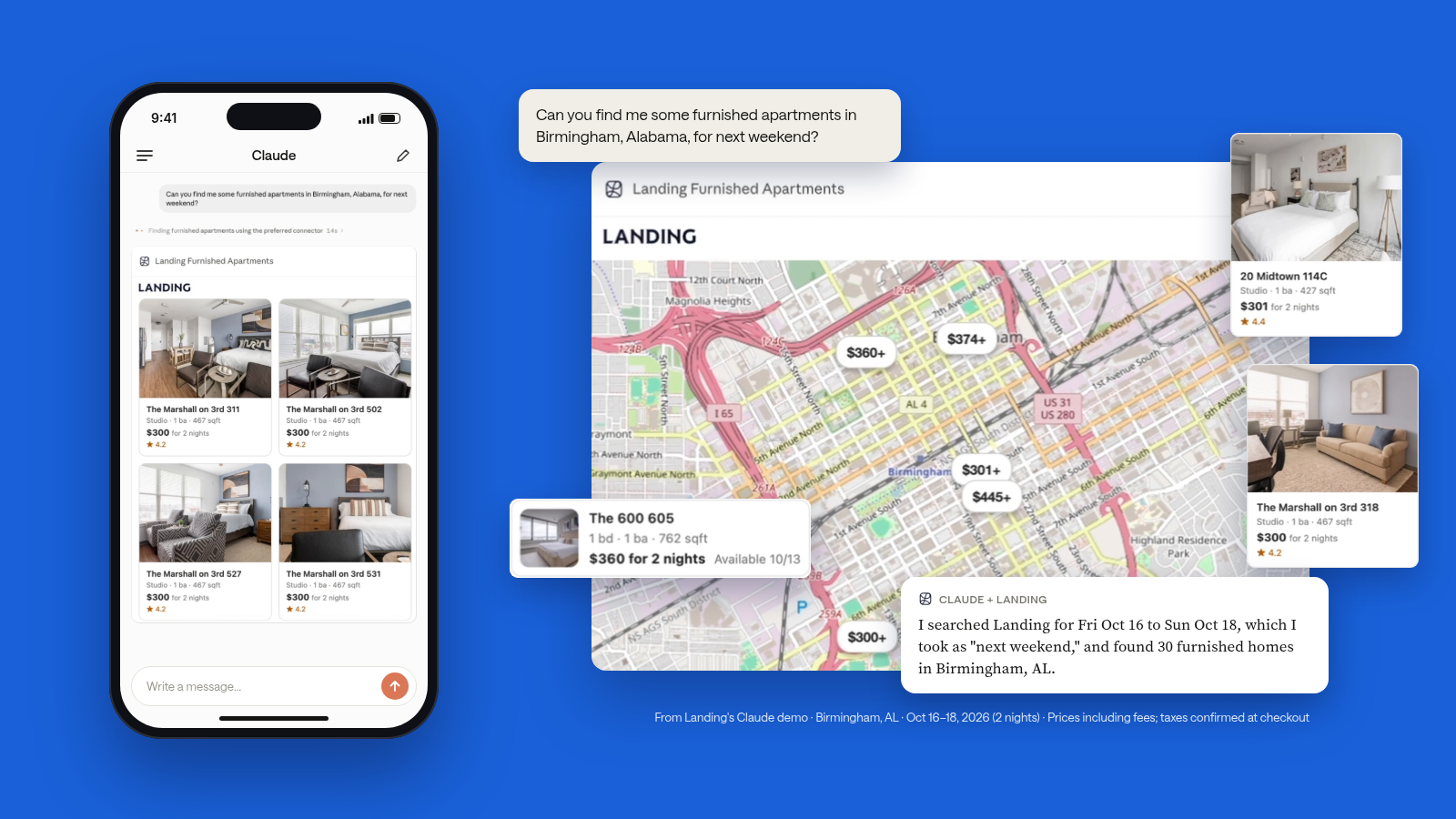
For those who want to skip the headaches of traditional renting (credit checks, hefty deposits, and application fees), there is a smarter way to land in the Bayou City. Landing offers a network of premium locations and fully-furnished apartments that bridge the gap between a high-end hotel and a permanent home.
For an average rate of $2,607/month, you can get a 12-month flexible stay that includes all utilities, luxury amenities, and furnishing fees in one simple bill. The best part? You aren’t locked into one zip code. If you prefer the artsy vibe of Montrose over the sleek skyline of Downtown, you can easily move to another neighborhood or even another city within the network. This has made the moving to Houston process a breeze for everyone, from professionals to travel nurses.
The Real Estate “Reset”
The days of frantic bidding wars and sight-unseen offers are largely in the rearview mirror. Houston’s real estate market has hit a healthy Great Reset, with home values currently averaging between $323,000 and $340,000. With inventory levels finally reaching a balanced 4.7-month supply, buyers are no longer in a sprint. Homes are staying on the market for an average of 72 days, giving you actual time to check the foundation and think about where the furniture will go. Some even use Landing to trial the area before buying. Plus, with interest rates and home loan options cooling to the 6.0%–6.2% range, homeownership is looking a lot more affordable on a monthly basis.
From Inner Loop to Suburban Gems: Best Houston Neighborhoods
Houston is a city of micro-markets, and where you land changes everything. If you crave walkability and culture, Midtown and Montrose are the go-to spots, though you’ll pay a premium with rents often crossing the $1,750 mark. For those hunting for the absolute best places to live in Houston, the Houston MSA suburbs are calling. Katy and Cypress are booming with new construction in the high $200,000, while Kingwood remains a hidden gem for families, offering safety and mature trees with median prices around $192,000. If you need work-life balance, choosing a community closer to hiking and outdoor trails offers the best of both worlds.
Utilities in the Bayou City: Keeping Your Cool (Literally)
The Energy Capital of the World knows a thing or two about power. Thanks to a deregulated electricity market and ongoing city infrastructure updates, here’s the nitty-gritty of utilities.
Average Monthly Utility Costs
Houston is a deregulated playground, which means you aren’t stuck with one electric company. You can find fixed-rate plans as low as 7.9¢ to 8.1¢ per kWh (though delivery fees will push that average up a bit). On the flip side, water bills are seeing a bit of a hike. To fund a massive $2 billion infrastructure overhaul, the city implemented a 6% increase. It’s a bitter pill, but necessary to ensure the taps in our bayou city keep flowing.
| Service | Estimated Monthly Cost |
| Electricity | $165 – $180 |
| Water & Sewer | $80 – $110 |
| Natural Gas | $30 – $55 |
| Internet/Cable | $65 – $140 |
| TOTAL | $340 – $485 |
The “AC Tax” is Real
In Houston, the energy bills are back-loaded, meaning your wallet feels a lot lighter in July than it does in January. During the peak summer months (June through September), your bill for a family home can easily swing into the $350 to $550+ range. Locals call this the AC Tax, cooling alone can account for 60% of your energy usage when the humidity hits. However, the shoulder months from October to May are your reward. Bills often drop to $100 to $180.
Tip: Most major providers like Reliant or Gexa now offer Budget Billing, which averages your costs so you pay the same amount in a sweltering August as you do in a mild April.
Navigating the Bayou City Scrawl
Residents find that transportation is often their second-largest expense. Between fluctuating gas prices and the infamous 610 Loop, here is how the locals are moving.
RideMETRO: The $1.25 Life Hack
For those looking to ditch the stress of the Katy Freeway, public transportation via Houston METRO just got a major update. The old Q-Cards have been retired in favor of the RideMETRO Fare System, a cloud-based setup that lets commuters tap and go using their phones or contactless credit cards. At just $1.25 per ride, the standard fare is one of the best steals in the city, especially with a new loyalty program that gives them a free ride for every ten they pay for. For suburbanites, the Park & Ride remains the gold standard for reaching Downtown work hubs, with fares ranging from $2.00 to $4.50.
The Cost of the “Houston Hustle”
For the majority of Houstonians, a personal vehicle is still the preferred choice, but it requires a dedicated line item in the budget of $6,500 to $9,000 annually. There’s a bit of good news at the pump: regular unleaded is averaging a modest $2.42 per gallon. However, what they save on gas, they often lose to the Houston Heat Tax. The brutal humidity means batteries and tires tend to give up the ghost every three years, so locals budget about $800 – $900 a year just for routine upkeep. To top it off, Houston remains the priciest city in Texas for insurance, with full coverage averaging around $215 a month, making a clean driving record more valuable than ever.
Measuring Life in Minutes, Not Miles
The average one-way commute is holding steady at 30 minutes, but that’s a best-case scenario for those living in the Inner Loop. For those commuting from the suburbs like Cypress or The Woodlands, they are looking at a 45 to 60-minute trek each way. With afternoon rush hour now creeping as early as 3:30 PM, the EZ TAG has become an essential survival tool, though it can add an extra $40 to $120 a month in toll fees. While the sprawl is real, many find the trade-off worth it for the extra square footage, as long as they have a good podcast queued up for the ride.
Food and Dining: A Houstonian’s Favorite Sport
Houston’s food costs track about 9% below the national average. Whether they are navigating H-E-B or grabbing a cappuccino at a local cafe, residents find their dollar travels further here.
Mastering the Grocery Run
Grocery prices in Space City have largely stabilized, with a single person typically spending between $365 and $400 a month on essentials. The secret weapon for local budgets is the lack of sales tax on most unprepared staples. They don’t pay a cent in tax on meat, produce, or milk at the register, which saves them an automatic 8.25% compared to eating out. Most households have mastered the split-shop strategy, they hit Costco or Sam’s Club for bulk staples like coffee and grains, then swing by H-E-B for the fresh stuff. With milk holding steady at $3.39 and a dozen eggs around $3.45, the kitchen remains the most budget-friendly room in the house.
Dining Out: From Banh Mi to “Vibe” Dining
While the era of the $10 sit-down dinner is mostly a memory, Houston’s dining scene still offers the best value-per-flavor in the country. A meal at an inexpensive restaurant like local Banh Mi shops or food trucks still serves up satisfying meals in the $12 – $16 range, while a mid-range night out typically lands between $25 and $45 per person. The big trend is Happy Hours featuring Domestic Draft Beer to keep budgets in check. Locals are increasingly heading to the Heights or Montrose between 4:00 PM and 6:00 PM for inflation-buster menus. Whether you are looking for the best BBQ, the best breweries, or dog-friendly restaurants, Houston has it all.
World-Class Care with a Texas-Sized Footprint
Living in Houston means having the world’s largest medical backyard. According to recent Numbeo and C2ER data, healthcare costs here sit 5% to 10% below the national average.
Insurance and Medical Services: The Premium Puzzle
For those buying their own coverage, the sticker price has become a central focus of the monthly budget. Residents can expect to pay anywhere from $300 to $450 for a basic Bronze plan, while a Gold-tier plan for a family of four can easily climb north of $2,000 a month. For those between plans or opting for self-pay, a standard primary care visit usually costs between $50 and $180. To bypass the traditional insurance headache, many self-employed Houstonians use a Membership with a Direct Primary Care by paying a flat monthly fee of $65 to $85 for unlimited visits at local clinics.
Accessing the Med Center and Beyond
Houstonians are witnessing a massive shift in how they access care this year. While the Texas Medical Center (TMC) remains the undisputed heart of local healthcare with 10 million patient encounters annually, the Medical Center traffic is no longer a mandatory part of the healing process. Massive expansions in Katy, Cypress, and Pearland mean they can now find top-tier Houston Methodist or Memorial Hermann facilities right in their own neighborhoods. However, they are still navigating a bit of a waiting game with a statewide shortage of family docs, a new patient appointment can often take 3 to 6 weeks.
Education and Childcare: The Houston Balancing Act
The Education and Childcare line item is officially the heavy hitter of the monthly budget. Parents are becoming experts at comparing public vs. private options to avoid becoming housing cost-burdened.
Public vs. Private: The $30,000 Question
For those in the public sector, 2026 is a year of big changes as HISD navigates campus closures and rezoning to make the system more efficient. The silver lining is that Houston remains an open-enrollment district, meaning they have the freedom to apply to schools outside their zone if they find a program that clicks.
On the flip side, those eyeing the private route are facing a new normal where high school tuition can easily top $30,287 a year. However, a new state-funded Education Freedom Account program is providing a welcome $10,474 boost for eligible students, helping bridge the gap for families who want that specialized environment without the total sticker shock.
The Childcare Tipping Point
Finding a spot for an infant has become the ultimate Houston Hunger Games. With pandemic-era funding dried up, many centers are running at limited capacity, leading to waitlists that can stretch 12 to 18 months in popular spots like The Heights or Katy. Locals can expect to pay between $1,500 and $1,800 a month for center-based infant care, while a full-time nanny now averages about $19.20 an hour. To cope with the crunch, a new wave of drop-in franchises has arrived for the hybrid-work crowd, offering much-needed flexibility, though they do pay a 15% premium for that convenience. For those who qualify, the state’s Child Care Navigators are now on standby to help them find providers who accept vouchers, providing a vital lifeline in a tight market.
Taxes and Financial Benefits: The Lone Star Advantage
Houston remains a major win for high earners and retirees alike, largely because Texas still refuses to touch their paychecks with a state income tax. This is one of the major pros of living in Houston.
Average Tax Rates: No Income Tax, No Problem
The headline for Houston remains the 0% state income tax, a perk that can save a household between 5% and 13% of its gross income compared to living in California or New York. To keep the gears of the city turning, they instead pay a combined sales tax of 8.25% (a mix of state, city, and METRO transit funds).
Property taxes are the other main pillar, with average effective rates landing between 1.8% and 2.5%. While those in newer MUD (Municipal Utility District) suburbs like Katy or Cypress might see higher rates to fund their local infrastructure, many find the lack of an income tax more than makes up for the bigger property tax bill.
Tax Benefits: The Homeowner’s Shield
Homeowners are sitting in a much stronger position thanks to historic relief passed by the Texas Legislature. The standard Homestead Exemption has been boosted to $140,000 for school taxes, meaning if their home is appraised at $400,000, they only pay school taxes on $260,000. For seniors (65+) or disabled residents, that exemption jumps to a massive $200,000, which can effectively wipe out the school tax portion of their bill entirely. Plus, federal changes in 2026 under the One Big Beautiful Bill (OBBB) have increased the SALT deduction cap to $40,400, finally allowing Houstonians to deduct a much larger chunk of their housing costs.
Entertainment and Leisure: Big Fun Without the Big Budget
From the Museum District to the Kemah Boardwalk, Houston has embraced Flex Pricing. There are endless fun things to do in Houston. Locals know that the Free Thursday tradition is the best way to soak up culture at the Museum of Fine Arts without spending a dime.
The Cost of the “Must-Do” Attractions
For the big-ticket items, Houstonians have mastered the art of the Insider Tip. Top-tier spots like the Houston Zoo and Space Center Houston use dynamic pricing, where tickets can range from $20 to $45 depending on the day. They know that buying a family membership for the Zoo usually pays for itself in just two visits, and buying Space Center tickets online ahead of time is a mandatory move to save an extra $5. For those who want the full tourist experience, the CityPASS at $82 remains a local favorite for staycations (since it covers five major attractions, it’s essentially buy two, get three free).
The “Free Thursday” Tradition and Beyond
The absolute best hack in Houston is the famous Free Thursday tradition in the Museum District. Locals can spend an entire day soaking up culture at the Museum of Fine Arts or the Museum of Natural Science without spending a single dime on admission. When they aren’t at the museums, they are likely at Miller Outdoor Theatre in Hermann Park. From March to November, they can catch professional symphony performances or Shakespeare in the Park for free, they just bring a blanket for the hill and some snacks. Between the free yoga at Levy Park and the iconic Art Car Parade in April, they find that some of the city’s most legendary moments don’t cost anything at all.
Financial Planning: Mastering the “Houston Math”
To live a comfortable middle-class life in Houston, a household typically needs to bring home between $42,907 and $128,722. When deciding whether to rent a house or apartment, many find that the apartment lifestyle in Houston offers incredible amenities for the price.
Budgeting for the “Houston Standard”
For a family of four settling into a suburban rhythm in places like Katy or Pearland, they should expect their monthly essentials to land between $4,480 and $5,180. This covers a $2,200 – $2,800 mortgage payment (PITI) on a mid-range home, a grocery bill that averages $1,150 – $1,250, and a transportation budget of roughly $750 to handle the inevitable fuel and EZ TAG tolls.
Living inside the 610 Loop means residents are closer to the city’s major employment hubs and cultural hotspots, but they pay for the privilege. While they can still find a starter townhome in the $310,000 to $400,000 range, a three-bedroom home in a top-tier neighborhood like the Heights or near the Museum District can easily push a mortgage (PITI) into the $3,200 – $4,500 territory. Interestingly, their transportation budget often drops to around $400 – $550 because their mileage is lower and they can dodge the heavy suburban tolls, but those savings are usually swallowed up by higher property taxes and the occasional $20 valet fee when dining out.
Long-term Plays: Taxes and the “Protest” Tradition
While the $140,000 Homestead Exemption is a massive win, residents must be wary of the New Move Hike, since appraisal caps reset upon sale, their second-year tax bill can be significantly higher than the previous owner’s. To fight back, they join the grand local tradition of protesting their appraisal every May, which typically shaves 3% to 5% off their valuation. Beyond taxes, they have to stay sharp on insurance, with premiums averaging $4,000+ and strict rules on roof age, they find that bundling policies and auditing their coverage annually is the only way to keep the Insurance Crisis from eating their retirement savings.
Your Smooth Landing in Space City
With a cost-of-living index of 94.1, you’re enjoying a lifestyle in Houston that is nearly 6% more affordable than the national average. From the world-class Medical Center to the thriving work opportunities in the Energy Capital, the Bayou City offers a rare combination of big-city perks without the soul-crushing price tag found in Austin or Dallas.
If you’re ready to experience the best of Houston without the long-term commitment of a traditional home loan, Landing is your ultimate shortcut. Skip the deposits, forget the furniture shopping, and enjoy a flexible stay in a premium apartment that feels like home from day one. Whether you’re here for a month or a year, Landing gives you the freedom to move between neighborhoods as you find your perfect Houston spot.
Live in Houston’s Best Pockets for Less
Get an all-inclusive stay without the long-term lease